
The exact playbook Founders Forge used to build a thriving entrepreneurial ecosystem—and how any community can replicate it
When David Nelson moved to Johnson City, Tennessee in 2014, the startup scene was nearly invisible. Eight founders scattered across the region, working in isolation. No community. No support infrastructure. No reason for anyone to think this corner of Appalachia would become an entrepreneurial hub.
Fast forward to today: 96 high-growth startups. Over 4,000 small business licenses (up from 2,700). A regional conference attracting 350+ founders from 16+ states. And a systematic approach to community building that’s now being deployed across other overlooked regions.
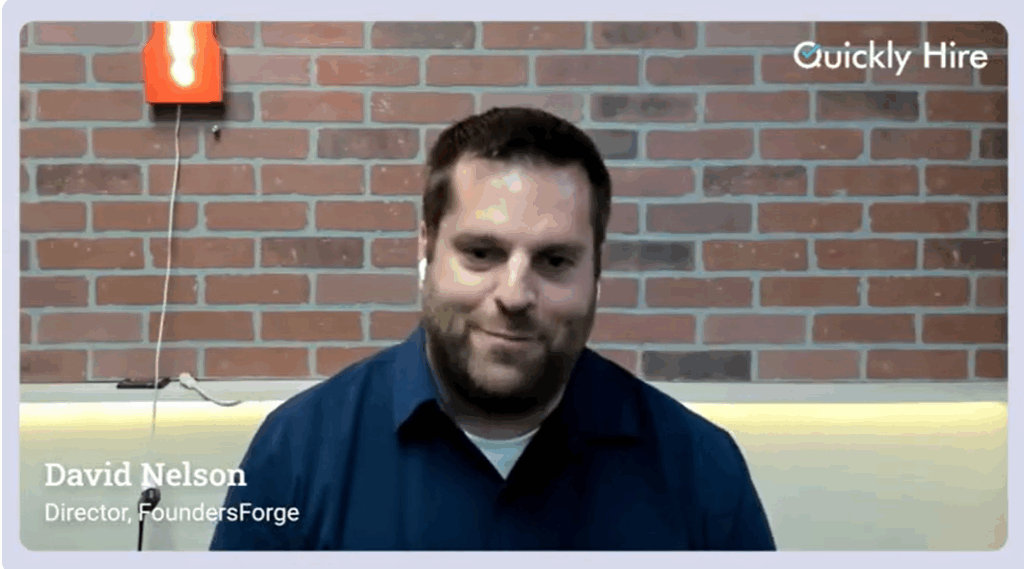
David Nelson, Executive Director of Founders Forge, shared the complete playbook in our latest podcast interview—including how AI and fractional teams are changing the game for resource-constrained founders.
The Catalyst: when 125 people showed up unexpectedly
Every ecosystem has an origin story. For Johnson City, it was 2016.
A small group of frustrated founders decided to stop complaining about the lack of startup community and do something about it. They organized a pitch competition. The goal? Get 35 people to show up.
“Why 35? I have no idea,” David admits. “It was some arbitrary number.”
125 people showed up.
They ran out of food. They ran out of chairs. The energy was electric. David remembers standing in front of that unexpected crowd and declaring: “Entrepreneurship is strong in Johnson City, Tennessee.” The room erupted in cheers.
That single event became the inflection point. It proved the founder energy already existed—it just needed a reason to come together.
From event to ecosystem: building sustainable support
A successful one-time event is great. A sustainable ecosystem requires infrastructure.
Founders Forge formalized in January 2020 (just before COVID, adding its own layer of complexity) and immediately focused on systematic support rather than sporadic programming.
Their cornerstone program, Avante, is a six-week startup bootcamp that takes founders from idea to launch or from early traction to structured growth. With a 266-page workbook and facilitator-led cohorts, the program emphasizes three critical foundations most founders overlook:
Customer validation from day one
Following “The Mom Test” methodology, Avante teaches founders to talk about customer problems, not their solutions. Too many startups build in isolation and wonder why adoption stalls. Continuous validation becomes part of the DNA.
Financial literacy that actually matters
David’s seen too many founders show up saying, “I haven’t paid sales tax in two years and the IRS is sending letters.” The program ensures every founder can read a P&L statement and cash flow report. Not accountant-level expertise—just enough financial literacy to avoid catastrophic mistakes and make informed decisions.
Modern AI-powered marketing
In today’s environment, a small team leveraging AI can compete with organizations 10X their size. Avante integrates AI training so founders understand how to multiply their marketing output without multiplying their budget.
The program runs both in-person cohorts (one night per week for six weeks) and hybrid models for geographically dispersed regions. After graduation, founders stay connected through an online platform and regular touchpoints—because support that ends with the program creates short-term wins, not long-term ecosystems.
The playbook goes national
Here’s where it gets interesting.
Founders Forge realized that places like Johnson City exist everywhere—overlooked communities with untapped founder energy, just lacking the structure to bring it together.
They’ve now packaged the Avante program for deployment in other regions. Partner organizations (Chambers of Commerce, economic development groups, entrepreneur centers) license the program, run their own cohorts, and tap into Founders Forge’s network for mentorship and connections their local community can’t provide.
The results mirror Johnson City’s trajectory: 10-20 companies launching per year through each bootcamp, communities coalescing around entrepreneurship, and founders helping founders in a virtuous cycle.
David’s mission extends beyond one town: “We want to change what people think of when they think of Appalachia. And it’s working.”
Why AI changes everything for resource-constrained founders
One of the most actionable parts of our conversation centered on how AI fundamentally changed the resource equation for startups.
Founders Forge operates with a team of four people (including one intern). They run multiple bootcamp cohorts, organize a 350-person conference, support 96 high-growth startups, maintain an online community platform, and build custom internal tools.
How? AI multiplied their capability 10X.
“When I used to build app MVPs for clients, it cost $60,000 to $150,000,” David explains. “Today, a fractional developer leveraging AI can deliver similar results at a fraction of that cost.”
His advice for founders is direct: Only hire people who leverage AI effectively.
Marketing teams using AI get 2-3X the output of traditional approaches. Developers not using AI are leaving massive productivity gains on the table. Even non-technical founders can use no-code tools plus AI to build and iterate faster than ever before.
The resistance David sees? “Some workers view AI as a threat. But workers who embrace it become superhuman. Your output will be noticeably better than colleagues doing things the old way.”
He teaches entrepreneurship at East Tennessee State University. Recently, employers gave the program direct feedback: “Don’t send us any more students unless they know how to use AI and use it well.”
The opportunity window is open now for workers and founders who lean in. But it won’t stay open forever.
The fractional team advantage
David’s second company—a mobile and web development firm—started with a fractional remote team from day one.
After years of building relationships in the industry, he had a roster of talented developers and designers doing gigs on the side. When he launched, there was no lengthy hiring process. Just: “Hey, I have a project. Interested?”
The company scaled to 15 people. Some fractional workers eventually went near full-time. Others stayed part-time. Both models worked perfectly.
“I basically didn’t do traditional sales,” David recalls. “I talked to past clients, people I’d worked with, and connections in my network. They brought in projects. It built the company.”
This experience shapes how Founders Forge advises startups today: Start with fractional talent. Test fit and control costs. Scale individuals up as the business validates. Keep the flexibility.
Combine fractional teams with AI leverage, and resource-constrained startups can compete with far larger competitors.
Network beats everything
If there’s one theme David emphasized repeatedly, it’s this: Network building is the most important activity for founders.
His companies succeeded primarily because of relationships built over years. When he needed help, he knew who to call. When he launched something new, his network brought opportunities to him.
Founders Forge created Startup Mountain Summit specifically to solve the network problem for their region. Small markets struggle to provide the same depth of connections available in major tech hubs. The solution? Bring people from the outside in.
Last year, 255 tickets sold. Attendees came from 16 states. This year, they’re expecting 350+ participants.
The conference deliberately focuses on founders, not organizational back-patting. Every speaker delivers actionable information. Brad Feld will discuss mentorship. Sessions cover practical AI implementation, customer experience frameworks, and real tactics from operators building successful businesses.
They even added “adventure networking” before the main conference—ropes courses, hikes, and bike tours designed to help attendees form genuine connections before the awkward conference small talk begins.
The insight: Network building works best when it’s built around shared experiences, not business cards and elevator pitches.
The five-year vsion

David sees Johnson City becoming the model other rural communities actively try to replicate.
“In five years, instead of people saying entrepreneurship can’t happen in areas like this, they’ll either copy our model or reach out for help implementing it in their own communities.”
The broader mission: Make Appalachia economically viable through innovation and entrepreneurship. Change the narrative from “struggling region” to “overlooked opportunity with emerging advantages.”
Remote work accelerated this possibility. Remote workers are 2-3X more likely to start businesses. Regions like Johnson City that captured this wave and built support infrastructure have massive growth potential.
Three immediate takeaways for founders
1. Your community has more potential than you think
The founder energy probably already exists in your region. Someone just needs to create space for it to come together. Don’t wait for perfect conditions. Organize something. See who shows up.
2. Start fractional, leverage AI, move fast
The traditional playbook of full-time hires and six-figure development budgets is obsolete. Fractional teams using AI can deliver equivalent or better results at a fraction of the cost and time. The math has fundamentally changed.
3. Build your network before you need it
Stop grinding in isolation. Get involved in your local ecosystem. Attend events even when uncomfortable. Participate in wider networks beyond your immediate geography. The relationships you build now become the foundation for everything that comes next.
Learn more
Founders Forge offers the Avante bootcamp program for communities interested in systematic founder support. Visit foundersforge.com for details.
The Startup Mountain Summit takes place November 6-8, 2025 in Johnson City, Tennessee. Registration and full schedule available at startupmountainsummit.com.
Connect with David Nelson through the Founders Forge website or find him on LinkedIn.
Listen to the complete interview on Spotify or YouTube with David Nelson to hear the full story of building Founders Forge, tactical advice on AI implementation, and why the future belongs to connected, adaptable founders regardless of location.
Hire fractional freelancers with Quickly Hire
Just like Founders Forge leveraged innovative strategies to scale impact, you can accelerate your business by tapping into fractional freelancers. With Quickly Hire, you gain access to vetted experts in marketing, technology, operations, and more—without the overhead of full-time hires. Whether you’re a founder building your first startup or a growing business ready to scale, fractional talent helps you move faster, stay lean, and focus on what matters most.