
Episode Guest: Huw Mathias, Freelance Brand & UI Designer
Huw Mathias took what many would consider an unconventional path to becoming a successful fractional designer. From film school to corporate presentations to running his own global design practice, his journey offers valuable lessons for both growing businesses and aspiring fractional professionals.
The winding path to design excellence
“I’ve always been creative and artistic,” Huw reflects. “My mother said that by the age of two I was holding a pencil.” Despite this early artistic inclination, Huw’s path to professional design wasn’t direct. After his professors encouraged him to pursue an art degree, he chose film instead, driven by wanderlust and a passion for movies.
His film degree included a transformative year at CU Boulder and internships with well-known West Coast film companies. But the reality of breaking into the movie industry – requiring years of unpaid work – led him to London’s corporate world instead.
Finding the way back to creativity
It wasn’t until age 30 that Huw made his pivot back to design. Starting in corporate presentations and desktop publishing, he gradually transitioned into graphic design roles. For eight years, he absorbed everything the corporate world could teach him.
“I learned a huge amount there,” he acknowledges, but adds that he found it “quite regimented.” By 2014, the desire for creative freedom and flexibility became too strong to ignore.
Building a fractional design practice
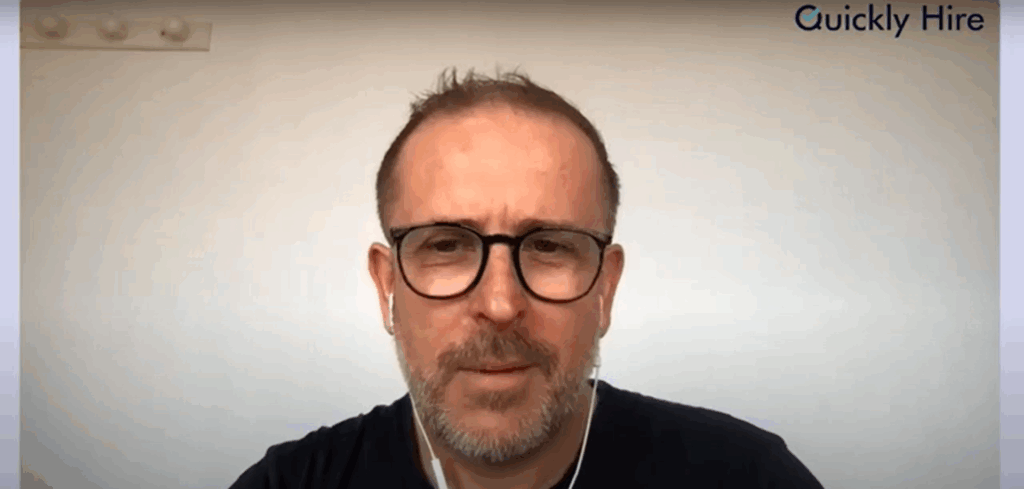
Huw’s transition to freelance work in 2014 marked the beginning of a new chapter. Through strategic networking and leveraging his contacts, he built a client base spanning multiple industries. His core services crystallized around:
- Branding design and strategy
- Website design and UI/UX
- Social media graphics
- Professional presentations
- Print projects
A pivotal decision came in 2016 when Huw secured residency in Spain before Brexit. “It’s one of the best things I ever did,” he says. This move enabled him to split his time between the UK and Spain while serving clients globally.
The power of flexible engagements
Huw’s experience with fractional work through Quickly Hire illustrates the mutual benefits of flexible arrangements. “Some contracts have been 15 hours a week, some have been 20 or 30,” he explains. “I really like that model because it allows me to build my other passions around my work.”
This flexibility has enabled Huw to:
- Maintain high creative energy for client projects
- Develop his fine art practice (with pieces selling within 24 hours of posting)
- Travel extensively (with Mexico being a favorite destination)
- Pursue architectural sketching through workshops in Lisbon
Communication: the foundation of remote success

Years of fractional work have taught Huw the importance of structured communication. His proven framework includes:
- Regular Check-ins: Weekly video calls, either one-on-one or with the full team
- Integrated Tools: Working within the client’s existing ecosystem (Slack, Gmail, etc.)
- Responsive Feedback: Maintaining a 24-48 hour response time
- Clear Structure: Establishing communication patterns from day one
“Having a regular, structured contact framework is really helpful,” Huw emphasizes. One client praised the “seamless experience” of integrating his skills into their workflow.
Navigating brand transformations
Huw’s approach to suggesting brand updates demonstrates the diplomatic skills essential for fractional professionals. When he noticed a client’s outdated and inconsistent branding, he carefully:
- Assessed stakeholder interest
- Identified decision-makers
- Confirmed budget availability
- Initiated conversations with the right people
“It’s always a case of being diplomatic and tactful in the approach,” he notes. This thoughtful process has led to successful brand refreshes and new concept development for multiple clients.
Diversification as a success strategy

Perhaps the most valuable lesson from Huw’s journey is his approach to income diversification. “I learned I can’t rely solely on design as income,” he shares. “So I’ve been setting up different streams of revenue.”
This includes:
- Core design services through fractional engagements
- Fine art sales (digital pieces and prints)
- Architectural sketching
- Photography projects
This diversification isn’t about doing more work – it’s about creating resilience while maintaining quality and passion for each endeavor.
Key takeaways for business founders
- Fractional doesn’t mean part-time commitment: Huw’s clients receive the same dedication as full-time employees, with the added benefit of fresh perspective from someone who isn’t burning out.
- Communication structure matters more than location: With the right framework, remote fractional talent can integrate seamlessly into your team.
- Diverse experience adds value: Huw’s background in film, corporate, and fine art brings unique perspectives to his design work.
- Flexibility attracts top talent: Offering 15-30 hour engagements allows you to access professionals who might not consider traditional employment.
- Brand consistency impacts growth: Regular brand audits and updates, guided by experienced professionals, can significantly impact your business perception.
Huw Mathias’s story demonstrates that the most successful fractional relationships balance structure with flexibility, allowing both businesses and talent to thrive. As he puts it, “Get creative in life” – advice that serves both growing companies and the professionals who help them succeed.
Listen to the full episode: Spotify Link | YouTube Link
Ready to work with fractional talent like Huw? Learn how Quickly Hire can connect you with proven professionals who bring both expertise and fresh perspective to your growing business.